
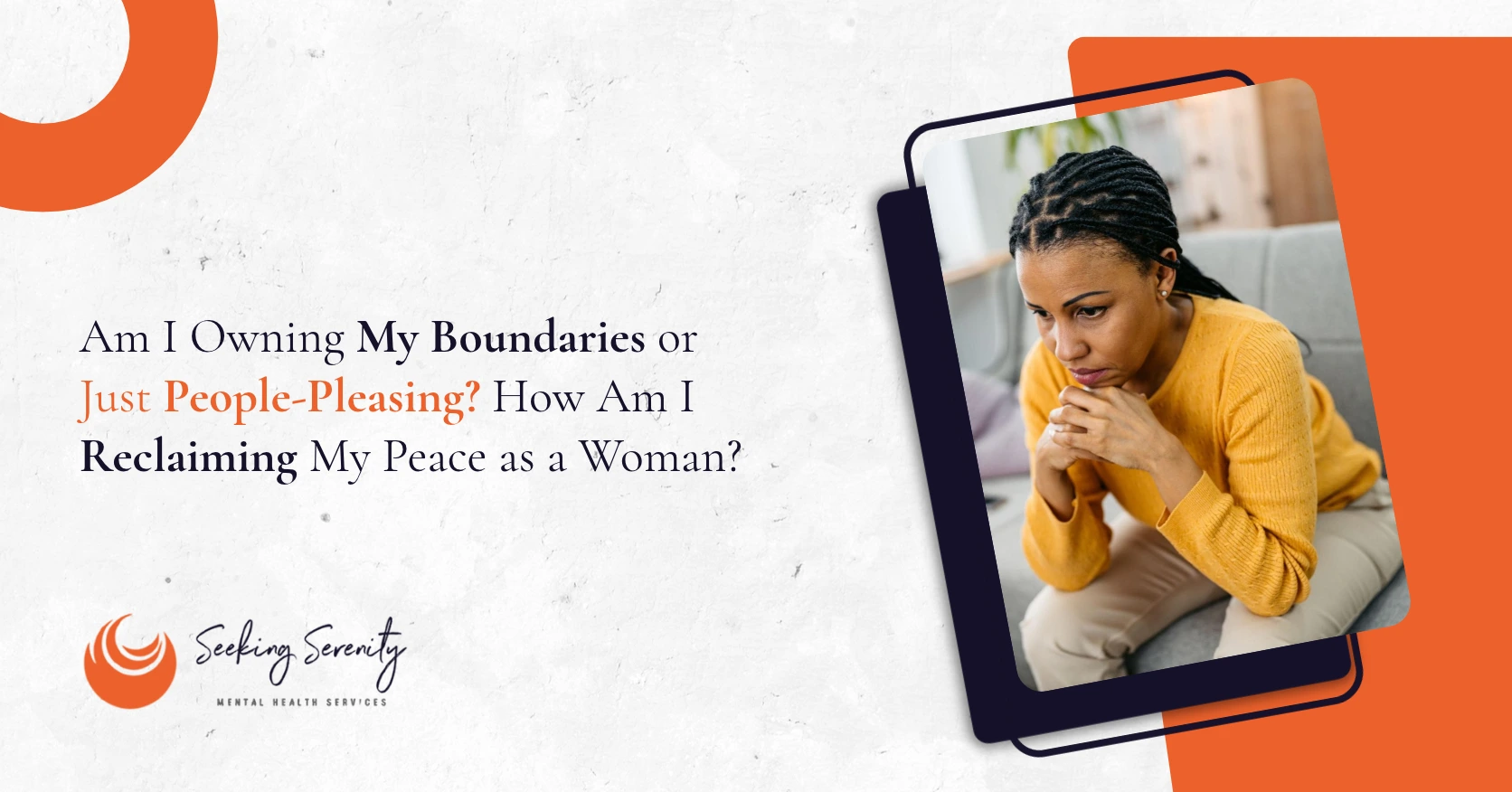
Setting clear limits empowers you to define boundaries that support your mental health and overall well-being.
People-pleasing is someone putting the needs of others above their own, sometimes resulting in burnout or resentment.
So, as a woman, reclaiming peace can be about knowing these cycles, prioritizing self-care and saying “no” without letting go of the guilt.
Seeking Serenity offers customized psychiatric services, medication management, and telehealth services in Worthington, Ohio, to support your mental wellness.
The Core Difference Between Boundaries and People-Pleasing
Many women are mistakenly interpreting kindness as compliance.
As a friend, partner or employee, you might think you’re being helpful.
Constantly catering to others’ needs is not true compassion; it reflects an avoidance pattern stemming from trauma or learned survival mechanisms.
Having boundaries is a state where you work in self-respect. You know that you have limited time and energy. People pleasing means working from a position of fear, typically the fear of:
- Rejection
- Conflict
- Being labelled “selfish”
At Seeking Serenity, we can look at patterns and create boundaries that support your serenity and lead to a life filled with joy and free of worry.
Compare Fast with Each Other: Where Are You?
| Trait | Owning Boundaries | People Pleasing |
| Motivation | Self-respect and mutual care | Fear of rejection, anger or conflict |
| Emotional Result | Inner peace, energy and empowerment | Burnout, hidden resentment and fatigue |
| Response to Requests | Pauses to assess personal capacity | Automatically says “yes” immediately |
| Self-Worth Source | Internal (comes from self-acceptance) | External (relies on others’ approval) |
Why Women Struggle with Saying No
Women are often trained to be ultimate caretakers in society. For many, kindness and open-mindedness are part of the currency in which they are valued, and these virtues are inculcated froma young age. This enormous burden causes an invisible mental burden.
The National Institute of Mental Health (NIMH) states that women are at higher risk than men of suffering from anxiety disorders and depression. One of the leading factors is chronic stress, which is exacerbated by overextending yourself by not establishing personal boundaries. Enough of pushing down one’s needs results in emotional exhaustion over time.a
In our telehealth practice at Seeking Serenity in Ohio, we see this every day. We do not attribute exhaustion to personal failure. Your mental health matters, too.
Signs You May Be a People-Pleaser
- You constantly apologize, even when you have no control over it
- You start feeling guilty about having to refuse an invite
- You say or do what other people in a group say or do, in order not to draw attention to yourself
- You feel physically tired or resentful; even getting in touch with those you love leaves
- You make sure your friends and family are at ease and forget about your own simple demands
Steps to Set Healthy Boundaries and Find Peace
Taking back your peace is a gradual process. You don’t have to change your entire personality all at once. You can take simple steps every day to significantly reduce your anxiety.
- Start With the “Pause” Method
If your friend calls you out for help, don’t respond right away. You may automatically answer “yes” to your brain.
The Strategy: Say, “Let me check my schedule and get back to you.”
The Benefit: This provides your nervous system the time to calm down to make a decision and not make a decision based on fear.
At Seeking Serenity, we help you manage the anxiety in your day-to-day life in a customized way, not a standardized way.
- Identify Your Non-Negotiable
Make a list of factors that are important to your mental health.
Example 1: If 8 hours of sleep is required, the hard boundary may be to turn off your cell phone at 9:00 PM.
Example 2: If you require time to think when you’re finished talking, tell the students that you need 30 minutes of silence to answer their questions.
- Release the Need to Over-Explain
In setting a limit, be brief in your response. For instance, saying, “I won’t be able to make it this weekend, but I hope you have a great time,” is both complete and polite. You don’t have to make excuses or give detailed explanations about time constraints.
FAQs
Is setting a boundary selfish?
No. A boundary protects your capacity to keep showing up. It is a chore, and not a punishment to another person.
What if the other person gets angry?
Their anger is not a verdict but information. You don’t have to stay away from your limit to control their response.
How do I stop feeling guilty after saying no?
Feeling guilty is normal at first. Notice the feeling, but don’t let it make your choices. It gets easier over time. At Seeking Serenity, we help you navigate this guilt as part of a comprehensive treatment plan.
Do boundaries ruin relationships?
Setting boundaries can make relationships better! You will feel less upset and more honest.
Ready to Prioritize Your Mental Wellness in Worthington, Ohio?
You don’t have to go through the process of regaining your peace all by yourself. When anxiety, depression or chronic burnout is making it difficult to get what you need, a professional can be a lifesaver.
Awa Ndiaye at Seeking Serenity offers kind and caring mental health services. We provide:
- Comprehensive telehealth visits
- Psychiatric medication management from the comfort and privacy of your home
- Special therapies for deep sadness
Take the first step into wellness today. Please reach out to Seeking Serenity to make an appointment to start living your life peacefully and in balance.





No comment