
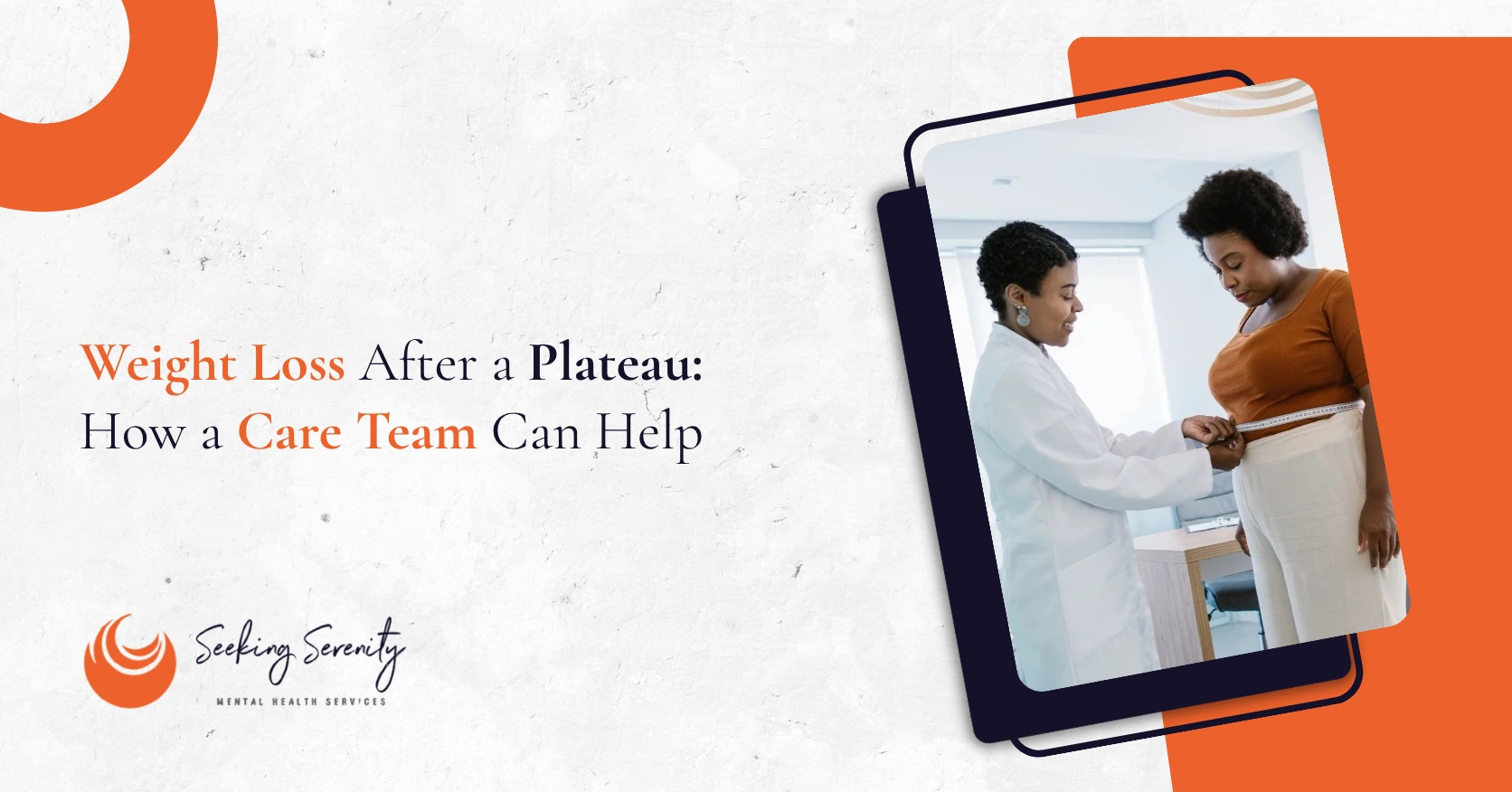
A weight-loss plateau occurs when your scale stops moving even though you follow your diet and exercise plan. Your body simply adapts to your new routine, making weight loss after a plateau more challenging.
For residents in Worthington, Ohio, a dedicated telehealth care team can help break this stall by evaluating your health, managing stress, and strategically updating your personalized plan.
At Seeking Serenity, our medically guided weight-loss service takes an individualized approach to health and wellness.
Why Do Weight Loss Plateaus Happen? 4 Hidden Causes

Early weight loss often includes water weight. The body requires fewer calories, and daily activity may decrease as fat is lost. A plateau is not a failure; it is a natural process in which your body adapts to the new weight and is working as it was designed to do. However, the same basic strategy doesn’t always work following a shift in your body.
Below are some of the changes that may happen in the background that will slow the scale:
- Metabolic Adaptation
Your body needs fewer calories as you lose weight. Research suggests plateaus affect about 85% of people trying to lose weight. This adaptation means you might not be able to make the same calorie deficit to lose weight as before.
- Reduced Non-Exercise Activity Thermogenesis (NEAT)
NEAT stands for energy expended with daily activities such as walking, fidgeting, standing and taking stairs. If you are losing weight, you might get less active without realizing it. You might also be more fatigued during exercise. This decrease in NEAT may subtly decrease your overall daily energy expenditure.
- “Calorie Creep”
Small, unrecorded bites and tastes add up. Cooking oils, sauces, creamers and weekend meals can gradually add up without being recorded on a food log. This is also referred to as calorie creep.
- Water and Glycogen Shifts
The scale can plateau even while you are losing fat. Changes in sodium, carbohydrates, hydration, menstrual cycles and glycogen can mask fat loss. Strength training can help you build muscle mass at the same time that you are losing fat. Muscle is dense, so the scale may not show the positive change.
How Do You Know If You Are in a True Plateau?
How do you know if you are really stuck? It is very helpful to look at the facts. Here are a few clear signs to watch for:
- The scale has shown little or no change for at least 3 weeks
- Your clothes fit the same way they did last month
- Your waist or other body measurements have not changed
- Your diet and activity routine have stayed consistent
- You are working hard in the gym, and you have been gaining muscle mass, but your scale isn’t reflecting the body that you are working toward
Keep in mind that normal weight fluctuates day to day. A true plateau is a pattern over weeks, not a single frustrating morning.
How Can a Care Team Help You Break the Plateau?
Trying to fix a plateau alone can feel very frustrating. Extreme diets rarely work and can even hurt your health. A care team offers safe and smart choices. At Seeking Serenity, our medically guided weight loss service provides targeted, evidence-based interventions for our Ohio patients.
- Nutritional Recalibration
Your total daily energy expenditure (TDEE) needs to be recalculated to create a new 500-750 calorie deficit per day. These numbers can be broken down with accuracy by a registered dietitian so that you can have a deficit without leaving your nutritional needs behind. They can also create a period of the day to help with dietary periodization, which will get your metabolism off guard.
- Medical Guidance and Medication Management
For individuals who have maximized lifestyle interventions without success, a physician or endocrinologist can evaluate the need for medical support.
Clinical guidelines support the use of modern weight-loss pharmacotherapy to help manage the hormonal shifts (like increased ghrelin) that drive intense hunger during a plateau.
- Behavioral and Psychological Support
Perhaps the most overlooked element of weight loss is mental health. Health counselors are key factors in fighting diet fatigue.
At Seeking Serenity, our health counseling services focus on building resilient habits, setting realistic expectations and separating your self-worth from the number on the scale.
What Actionable Steps Will Your Team Take?
When you work with a care team, they will help you get back on track by taking concrete steps:
- Audit Your Habits: Analyze food logs to identify “calorie creep” from unrecorded tastes and bites
- Adjust Macronutrients: Increase protein intake to preserve lean muscle mass and boost the thermic effect of food
- Rethink Physical Activity: Transition from regular aerobic exercise to strength training to gain muscle mass that will help burn more calories
- Prioritize Sleep and Stress: Elevated cortisol levels due to stress or lack of sleep lead to increased belly fat
Take the Next Step with Seeking Serenity in Worthington, Ohio
A weight loss plateau is your body asking for a new strategy. It is not something that you have to solve on your own. When combined with clinical skill and behavioral counseling, you can break through your body’s natural defenses and attain sustainable health.
If you are ready to get support for weight loss after a plateau, we are here for you.
At Seeking Serenity, Awa Ndiaye uses her deep medical and mental health training to guide you. We serve patients all across Ohio through easy telehealth visits. We look closely at your medical history, your daily habits and your weight loss goals.
Contact us and book your appointment today to easily restart your journey to wellness.
FAQs
How long does a weight loss plateau last?
A plateau can last for a few weeks or a few months. It depends on how fast you change your eating and exercise habits.
Is it normal to stop losing weight suddenly?
Yes, it is very common. Almost everyone who loses a lot of weight will hit a plateau at some point.
Can stress stop me from losing weight?
Yes, it can. Being much stressed can make your body hold onto fat. Taking care of your mental health is a big part of your physical health.





No comment