
Do you ever feel like your heart is racing fast? Maybe your palms get sweaty. Your mind might spin with worry. This is what anxiety feels like.
Sometimes it can feel like too much to handle. It can make you feel scared about normal days.
Simple strategies can help you feel better anytime, anywhere.
At Seeking Serenity, we provide supportive methods to help people manage emotions and respond to stress and anxiety.
Let’s look at practical exercises you can try when anxiety feels overwhelming.
Some Practical Exercises
Take Deep Breaths to Calm Your Body
When you feel worried, your breathing gets short and fast. Changing the way you breathe tells your brain that you are safe. One great way to do this is belly breathing. Place one hand on your belly. Take a deep breath in through your nose. Feel your belly push your hand out. Then, blow the air out of your mouth very slowly. Do this five times. You can also try a counting trick.
- Breathe in while counting to four
- Hold the air inside for a count of seven
- Blow the air out slowly for a count of eight
Doing this stops the fast panic in your chest. It brings fresh air to your brain.
Use the 5-4-3-2-1 Grounding Exercise
Sometimes, your mind flies away into the future. You start worrying about things that have not happened yet. A grounding exercise brings your mind back to right now. The best exercises for this use your five senses. Look around the room you are in. Find these items and say them out loud:
- Five things you can see around you
- Four things you can feel with your hands
- Three things you can hear right now
- Two things you can smell
- One thing you can taste
This simple exercise is a powerful tool to stop racing thoughts. It gives your busy brain a clear job to do.
Practice Progressive Muscle Relaxation
Muscle tension is a potential symptom of anxiety. You may tighten your jaw, shoulders, hands, or legs without noticing.
Progressive muscle relaxation involves gently tightening and relaxing different muscle groups.
This can begin with the hands. Snugly pull them tight for a couple of seconds then relax. Pay attention to tension and relaxation. Slowly go through each section of the shoulders, face, stomach, legs and feet.
The exercise should be gentle. You should stop if it causes pain or discomfort.
Take a Short Mindful Walk
Walking can provide both physical movement and a change of focus. A mindful walk does not require a special location or long workout.
As you walk, you can notice:
- How your feet feel against the ground
- The movement of your arms
- Sounds around you
- The temperature of the air
- Objects, colors and shapes nearby
You do not need to make the anxious thoughts disappear. Instead, you bring your attention to what you are doing right now.
Try Gentle Stretching
Stress can leave the body feeling stiff and uncomfortable. Gentle stretching may help you release some physical tension.
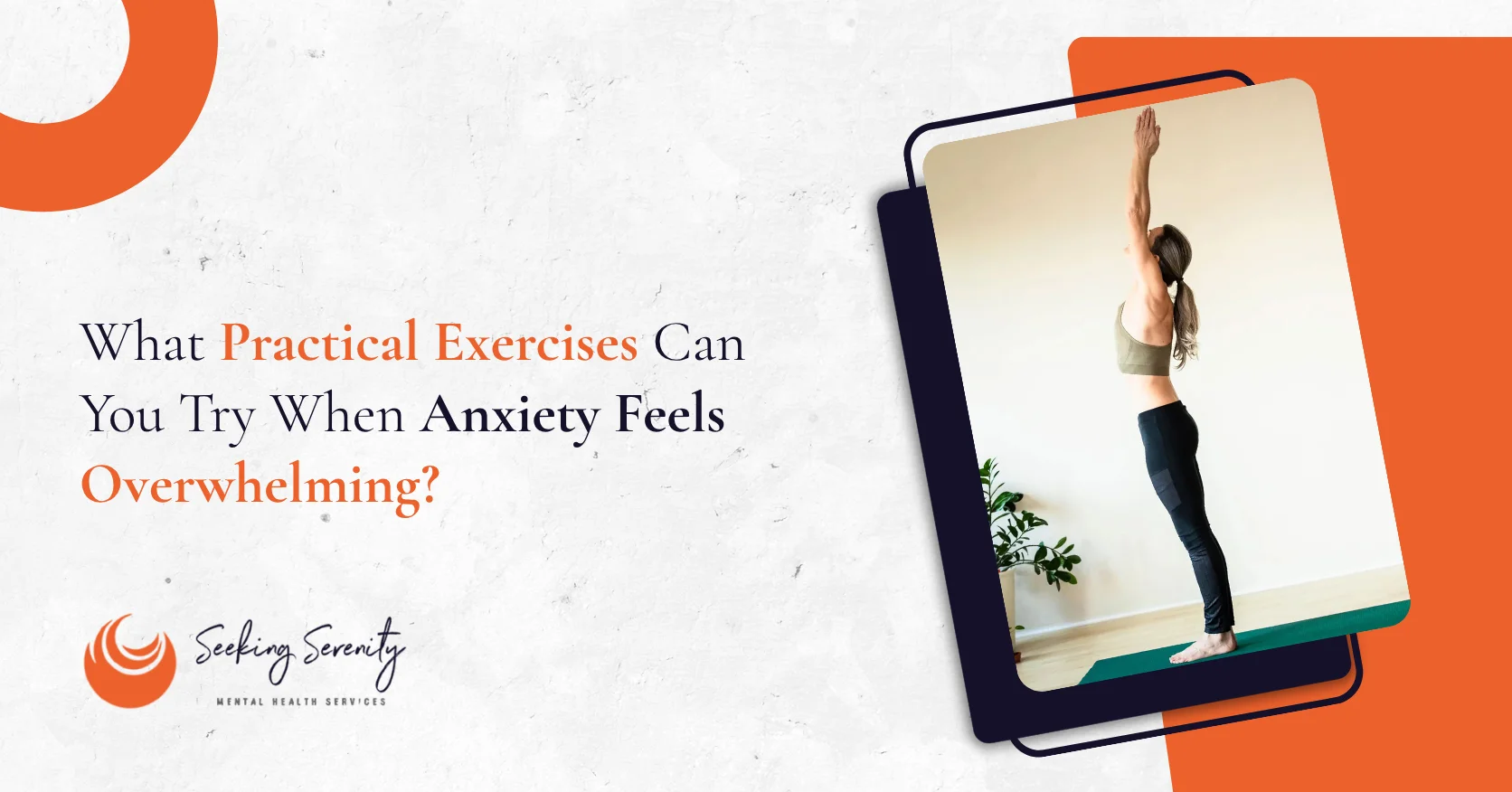
You can slowly stretch the neck, shoulders, arms, back and legs. Movements should be comfortable and controlled.
Even five minutes of gentle stretching can create a useful pause during a stressful day.
Write Your Worries Down on Paper
When you keep bad thoughts inside your head, they bounce around and seem huge. A good way to make them smaller is to get them out.
Grab a notebook and a pen. Write down everything that is bothering you.
Do not worry about spelling. Do not worry about making sense. Just get the words out of your head and onto the page.
Once the words are on paper, they do not feel so scary anymore. You might even want to rip the paper up and throw it in the trash.
Practice a Simple Body Scan
A body scan helps you notice physical sensations without immediately trying to change them.
You can sit or lie somewhere comfortable. Starting at the feet, slowly bring attention upward through the body.
You might notice:
- Tightness
- Warmth
- Coldness
- Tingling
- Heaviness
- Relaxation
There is no right or wrong sensation. The goal is to notice what the body is experiencing.
Use a Simple Counting Exercise
Counting can give an anxious mind a clear and simple task.
You can slowly count from 1 to 10 while breathing calmly. Then count backward from 10 to 1.
If your attention wanders, you can gently return to the number where you left off.
This exercise can be especially useful when you need something simple to focus on.
Do a Simple and Boring Chore
When anxiety is very high, doing a big task is too hard. But doing a small, boring chore can actually help you feel calm. A simple routine gives your mind a safe place to rest. Pick something easy.
- Fold a basket of clean towels
- Wash the dishes in the sink with warm water
- Sort your socks into matching pairs
These tasks have a clear start and finish. When you finish, you get a small feeling of success. That little spark makes you feel strong again.
Focus on the Cold to Stop Panic
Panic can make your body feel hot and tight. A cold temperature might wake up your nervous system. Using something cold acts like a reset button for your anxious brain.
Go to the sink and turn on the cold water. Splash the cool water on your face. You can also hold an ice cube in your bare hand. Focus on how the cold feels on your skin. The cold feeling is so strong that your brain stops focusing on the worry. It only focuses on the ice.
When Should You Seek Professional Support?
Practical exercises can be useful tools, but they are not a replacement for professional care when anxiety is severe, persistent or interfering with daily life. You might need extra support. Seeking Serenity offers compassionate mental health care to help you find your peace.
We provide psychiatric services for people in Ohio. We use an easy telehealth platform. This means you can talk to a caring expert from your own home. Awa Ndiaye, a certified nurse practitioner, leads the practice. She has over fifteen years of experience. She offers a full evaluation to understand your unique needs.
Seeking Serenity can help you with:
- Psychiatric medication management when it is right for you
- Care for anxiety, depression and mood changes
- Finding a holistic path to overall wellness
At Seeking Serenity, you are treated with radical empathy. You and your provider work as a team. Reach out today.
FAQs
Can deep breathing really stop a panic attack?
Yes. Slow belly breaths can slow your heart. They tell your brain, “You are safe.”
What if practical exercises don’t help?
Everyone responds differently. If anxiety continues to affect daily life, you can talk with a qualified mental health professional for extra support.

No comment