
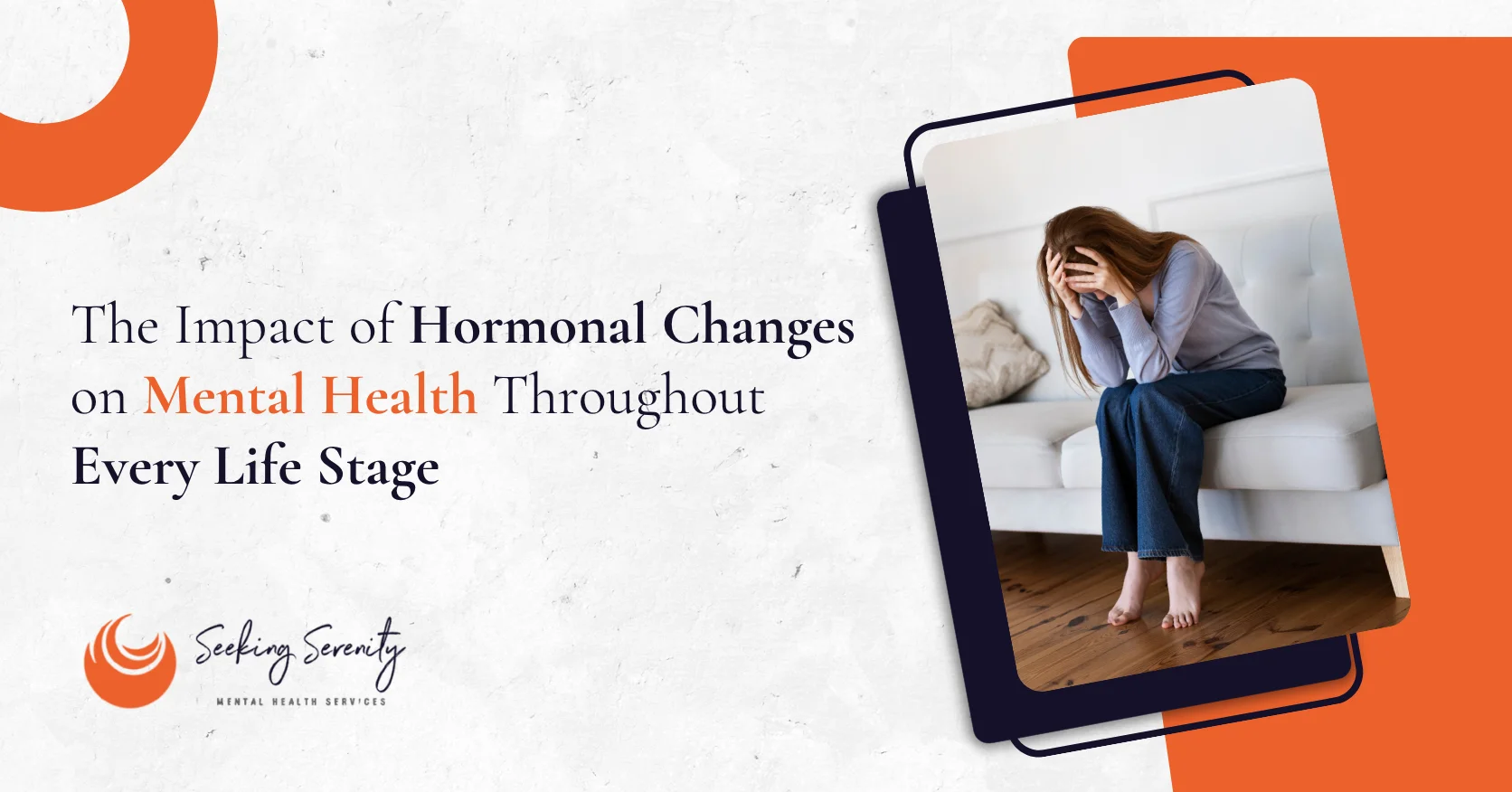
Your hormones do far more than just shape your physique. They silently adjust your mood, how you feel, and deal with stress from day to day. As these chemical messengers rise and fall, your emotional world usually rides their crests and troughs.
Which is exactly why many people experience anxiety, depression, or just ‘not feeling themselves’ at certain times of their lives without really being able to put a finger on it.
Given that you know now how your hormones relate to your mind, it is time for you to stop blaming and find more solutions. This is how hormonal changes affect mental health. We will take you through it stage-wise.
How Hormones and Mood Are Connected
Hormones like estrogen, progesterone, testosterone, and cortisol all have effects on brain chemicals that dictate emotion. Your feelings can follow when they swing up or down. This isn’t weakness or overreaction. It’s biology.
Common ways hormonal shifts show up mentally include:
- Sudden mood swings or irritability
- New or worsening anxiety
- You feel sad even when you have no clear reason to be so
- Some restlessness at night causes an effect on mood
- Difficulty concentrating or feeling foggy
These signs often look like a mental health issue alone. In truth, hormones are frequently part of the story.
Puberty and Adolescence
Teenage years cause the first real hormonal storm. Estrogen and testosterone skyrocket just as the part of the brain that controls emotion and impulse is still maturing. This combination can be a huge load for youngsters.
Adolescence. The hormonal changes that occur during this time may cause:
- Extreme mood changes and increased emotional sensitivity
- Initial experiences with anxiety or a low mood
- Changes in sleep patterns that exacerbate emotional highs and lows
- More stress around school and social life
Most teens pass through this stage without major problems. But when sadness or worry are incessant, that is not a phase to dismiss.
The Reproductive Years
Adulthood now has other cyclical hormonal upheavals, but these hormone shifts are often seen as less significant for mental health. Some have predictable monthly moods, others skin deeper struggles.
PMS and PMDD
Low hormone levels before menstruation can generate pre-menstrual signs and symptoms. For others, it is a mild inconvenience. It’s become far more serious for others.
- PMS often brings tension, bloating and moodiness in the days before menstruation.
- PMDD (premenstrual dysphoric disorder) is a severe form that can cause deep depression, anger or anxiety strong enough to disrupt daily life.
That pattern is a genuine medical problem deserving treatment.
Postpartum Changes
There is a steep decline in hormone levels after childbirth, and this can have a profound impact on emotional well-being. However, a new parent might be a little more tired of handling everything.
- Tearing and mood swings during the initial weeks are typical of pregnancy, which is commonly referred to as the “baby blues”.
- Postpartum depression is severe, long-lasting, and may be accompanied by sadness, guilt, or difficulty bonding.
- Postpartum anxiety results in racing thoughts and relentless worrying.
These experiences are commonplace but treatable. Arming yourself with knowledge and help early on is everything, both for you and your baby.
Perimenopause and Menopause
When a woman is nearing the edge of her forties and fifties, the levels of estrogen and progesterone start to drop. This transition, called perimenopause can last for years before menopause fully arrives.
People are often surprised at the emotional effects because they never expected to look at mental health.
At this point, you might experience:
- Anxiety, new or old fears
- A low mood or being uninterested in things you enjoyed
- Excessive irritability that is not typical of your character
- Night sweats result in poor sleep – an emotional energy drainer
- Self-doubt due to brain fog
These feelings are often cast aside into the realm of getting older. The truth is that with the appropriate support, it will help alleviate both the physical and the emotional burden of this transition.
Aging and Andropause
Hormonal changes occur as we mature, and every person – not just women– experiences them. Testosterone gradually decreases over time in men, a process sometimes referred to as andropause. It is this slow decline that can quietly impact mental health.
Signs to watch for include:
- Low energy
- Reduced motivation
- More sadness
- Irritability
- Shorter temper
- Trouble sleeping
- Trouble concentrating
In older adults of all genders, these changes can also be mixed with:
- Life stress
- Loss
- Health concerns
The only way to truly differentiate between hormones and emotions is to take a holistic (and humane) perspective of the individual.
Why Whole-Person Care Really Matters
And here is golden thread that connects every life stage: your mind and body are never separate! Mental health flows with hormones, and when hormones are out, mental health is likely to be affected too. Only treating one side very seldom brings complete relief.
A whole-person approach looks at:
- Your hormonal health and any patterns tied to your cycle or life stage
- Your emotional symptoms and history
- Your sleep, stress, and daily routines
- Your personal goals for feeling well again
This is exactly the kind of care that helps you feel like yourself again, not just for now, but for the long run.
Reach Out
Hormone fluctuations are indeed a part of life – yes, your body actually goes through this every month, from adolescence to menopause – but you do not have to bear the emotional costs alone.
And this goes for the person with monthly mood swings, the one feeling lost after giving birth or coping with perimenopause and aging: real help is available.
Awa Ndiaye, PMHNP, FNP, is a dedicated clinician offering whole-body compassionate care, treating body and mind as one.
As a dual-board-certified FNP and PMHNP with over 15 years of experience – she combines hormone therapy, mental health treatment and compassionate care to restore you to your best self.
Schedule your appointment now with Seeking Serenity.

No comment