
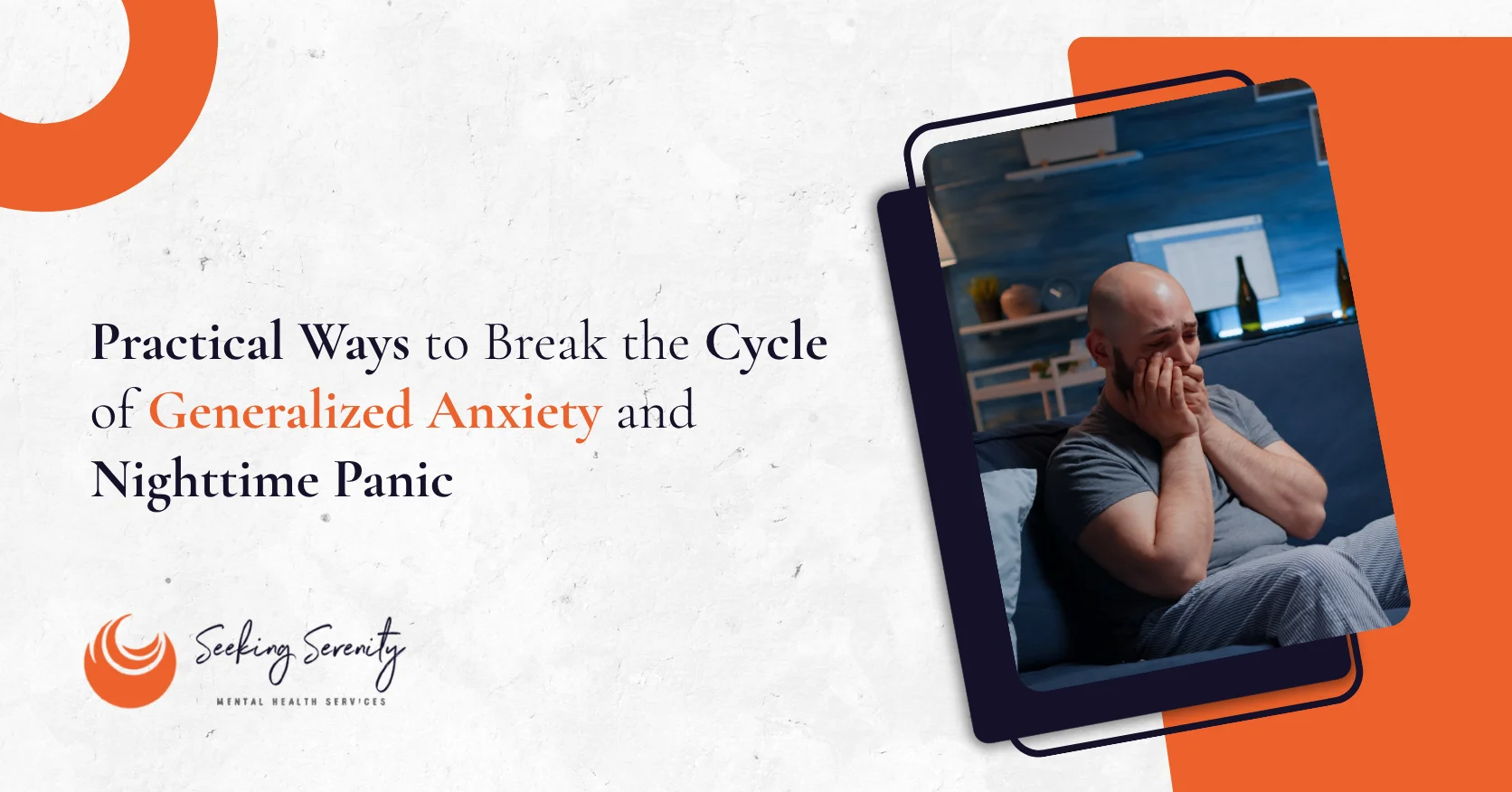
You get through the day. You’re tired by the time you get to bed. And then your heart starts going, or your thoughts do, and sleep is gone for the next two hours.
The day and the night aren’t separate problems. Whatever built up during the day is what’s running at night.
Why Nighttime Is When It Peaks
Daytime anxiety has things competing with it. Tasks, conversations, other people, noise. At night that’s gone. The nervous system has been running elevated for hours and now there’s nothing to absorb the output. So it surfaces.
Nighttime panic often feels worse than daytime panic because it comes out of what should have been rest.
The heart goes, the chest gets tight, the brain reads it as something medically wrong. It isn’t. It’s the same system doing the same thing it does when it’s been over-activated long enough.
The Problem Started Before Bedtime
Most people try to fix nighttime panic by changing what happens at night. No screens, no caffeine after noon, sleep hygiene. Some of that matters a little. The bigger variable is what the nervous system was doing all day.
Generalized anxiety keeps a low-level stress response running for hours. Cortisol stays up. The body never fully comes down.
By bedtime it’s depleted and still activated at the same time. That combination makes sleep hard to reach and panic easy to trigger.
Giving the Nervous System Room During the Day
Not eliminating anxiety. Just not letting it run completely uninterrupted from morning until the moment you lie down.
- Real breaks during the day, not switching screens, actual pauses with no input at all
- Physical movement, even short, which processes the stress hormones anxiety generates rather than letting them sit
- Winding down the stimulation and decisions at least an hour before bed, not an abrupt stop
- Writing down whatever is circling before bed, not to solve it, just to get it out of active memory
These aren’t new ideas. What makes them work is doing them before you’re already past the point where they can reach.
When the Panic Starts
The first thing panic does is convince you that something physical is wrong. Heart racing, can’t get a full breath, chest tight. The brain treats those sensations as a threat signal, which makes them worse, which makes the brain more alarmed.
The exhale controls the vagus nerve, which directly slows heart rate. Breathing out for a count of six or seven while the panic is happening is not a distraction technique. It’s doing something physiologically real. The inhale is shorter. The exhale is slow.
Checking your pulse on your phone makes it longer. Lying still and letting the sensations peak without adding fear to them makes it shorter.
Generalized Anxiety Doesn’t Just Go Away
For most people who have nighttime panic, the anxiety underneath it has been running for years. It feels like personality at that point. Just a worrier. Just wired that way.
Practical things help and are worth doing. They have a ceiling. CBT changes the relationship to anxious thoughts in ways that self-management doesn’t fully reach. Medication lowers the baseline activation when it’s too high for other approaches to get traction. The nighttime panic responds faster when the daytime anxiety is being treated rather than just managed.
Seeking Serenity
Awa Ndiaye, PMHNP, FNP, is dual-board certified as a Psychiatric-Mental Health Nurse Practitioner and a Family Nurse Practitioner, with fifteen years across hospitals, primary care, and psychiatric settings. Anxiety and panic at Seeking Serenity get treated clinically, through evaluation, medication management when it’s called for, and care that looks at the full picture.
Telehealth appointments available.
Phone: (614) 636-4110
Email: seekingserenity10@gmail.com
Location: 740 Lakeview Plaza Blvd, Worthington, Ohio 43230
Website: seekingtheserenity.com


No comment